
Safe Exercises During Pregnancy for Every Trimester
Discover the safest exercises during pregnancy for each trimester — from gentle walking and prenatal yoga in the first trimester to swimming and pelvic floor exercises in the third. A complete guide for Indian mammas.
Mamma's Maternity
31 July 2026
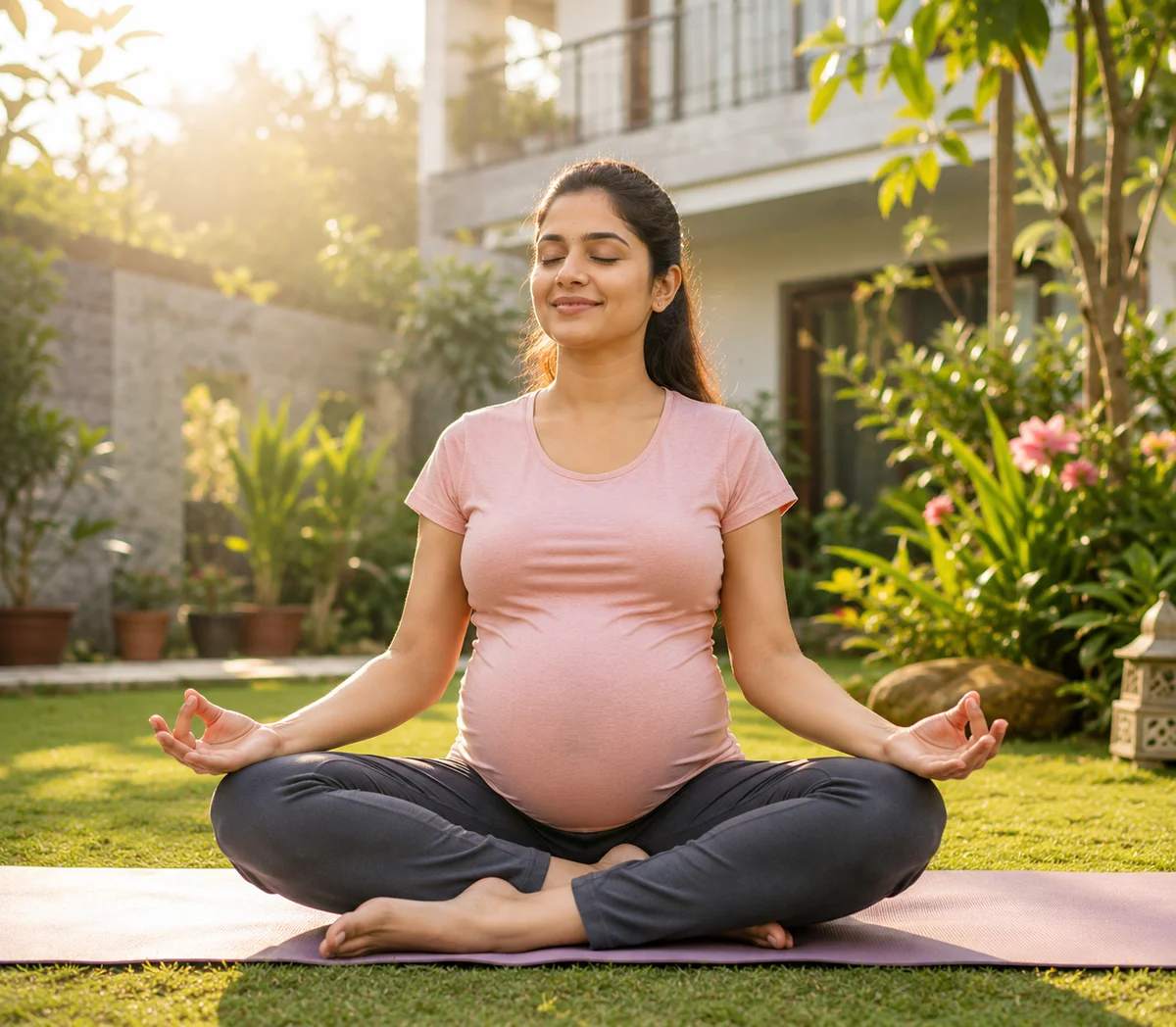
Staying active during pregnancy is one of the best gifts you can give yourself and your baby. Yet for many Indian mammas, the idea of exercising while pregnant feels uncertain — Is this safe? Will it harm my baby? Should I just rest?
The answer, backed by doctors and research alike, is clear: gentle, regular exercise is not only safe during a healthy pregnancy — it is actively beneficial. Walking, prenatal yoga, swimming, and low-impact exercises are considered safe and highly beneficial during pregnancy.
In this guide, we walk you through the safest pregnancy exercises trimester by trimester — what to do, what to avoid, and how to honour your body at every stage of this incredible journey.
> Important: Always consult your gynaecologist or midwife before starting or modifying any exercise routine during pregnancy, especially if you have a high-risk pregnancy or any medical complications.
Why Exercise During Pregnancy Matters {#why-exercise-matters}
Many mammas in India are told to "take it easy" throughout pregnancy. While rest is important, complete inactivity has its own risks. Regular prenatal exercise offers benefits that go far beyond physical fitness:
- Reduces back pain — one of the most common pregnancy complaints
- Relieves constipation and bloating — by keeping your digestive system active
- Reduces the risk of gestational diabetes and preeclampsia
- Promotes healthy weight gain during pregnancy
- Improves sleep quality — especially valuable in the second and third trimesters
- Boosts mood and reduces anxiety — pregnancy brings emotional ups and downs
- Prepares your body for labour — stronger muscles mean a stronger delivery
- Speeds up postpartum recovery — active mammas tend to bounce back faster
General Safety Rules for All Trimesters {#safety-rules}
Before we go trimester by trimester, these golden rules apply throughout your entire pregnancy:
✅ Stay hydrated — drink water before, during, and after every session
✅ Dress comfortably — wear breathable, loose maternity clothing and a supportive bra that accommodates your changing body
✅ Warm up and cool down — always give your body 5 minutes to ease in and ease out
✅ Monitor your intensity — you should be able to hold a conversation during exercise. If you cannot speak, slow down.
✅ Listen to your body — every pregnancy is different. What works for another mamma may not work for you.
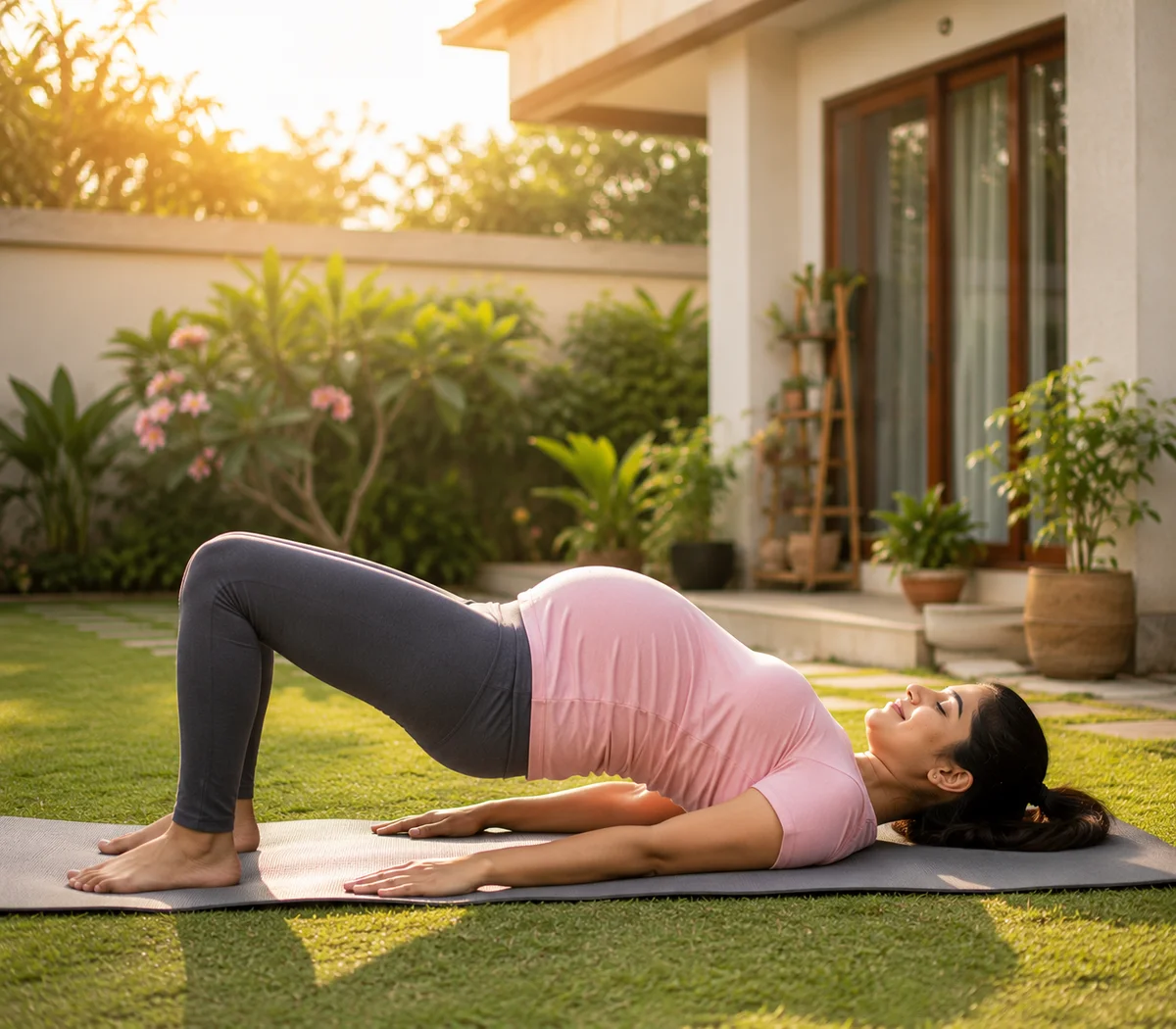
✅ Avoid lying flat on your back after the first trimester — lying flat on your back can cause the uterus to press on a large vein that returns blood to the heart, which may reduce blood flow to your baby.
✅ Stay cool — hot yoga is not considered safe for pregnant women and should be avoided. Exercise in well-ventilated, cool spaces.
🌱 First Trimester Exercises (Weeks 1–12) {#first-trimester}
What Is Happening in Your Body
The first trimester is a time of enormous invisible change. Your hormones are surging, your organs are rearranging to make room for your growing baby, and for many mammas, nausea and fatigue can feel all-consuming.
On days when you feel up to it, gentle movement can actually ease nausea, boost energy levels, and lift your mood significantly.
Best Exercises in the First Trimester
#### 🚶♀️ Walking — The Perfect Starting Point
Walking is the most universally recommended exercise for pregnant women. Walking with correct posture at varying paces — from a brisk power walk in the first trimester to a gentle stroll later — provides benefits every mamma can appreciate. How to do it: Start with 15–20 minutes and build toward 30 minutes daily. Morning walks are especially beneficial — fresh air can reduce nausea naturally.
Indian tip: If the summer heat feels overwhelming, try early morning walks before 8 AM or evening walks after 6:30 PM when temperatures drop.#### 🧘♀️ Prenatal Yoga
Yoga is excellent for pregnant women as it helps with breathing, relaxation, and flexibility, and also relieves back pain and reduces stress. Safe first-trimester yoga poses:- Cat-cow stretch — relieves back tension and improves spinal mobility
- Butterfly pose — opens the hips and improves flexibility in the pelvis
- Seated forward bend — gently stretches the lower back and legs
- Child's pose (with knees wide apart to accommodate the belly)
#### 🏊♀️ Swimming
Swimming is considered a safe form of cardio during every trimester. Water provides support to joints and is an excellent form of cardiovascular exercise.Even gentle laps or simply moving through the water provides full-body benefits without any impact on your joints or back.
#### 💪 Gentle Strength Training
If you were strength training before pregnancy, you can continue with lighter weights and careful modifications. Focus on form, breathe throughout every movement, and avoid any exercise that compresses or twists the abdomen.
Safe moves: Seated bicep curls, shoulder presses, wall push-ups, and light resistance band exercises.#### 🦵 Kegel Exercises (Pelvic Floor)
Kegels can and should begin in the first trimester. Kegel exercises strengthen pelvic floor muscles, which support the bladder and uterus, reduce the risk of incontinence, and help during labour. Squeeze your pelvic muscles and hold for 5 to 10 seconds, relax, and repeat 10 to 15 times.
You can do Kegels anywhere — sitting at your desk, watching TV, or waiting in a queue. No one will even know you are doing them.
🌸 Second Trimester Exercises (Weeks 13–27) {#second-trimester}
What Is Happening in Your Body
The second trimester is often called the "golden period" of pregnancy. For most mammas, nausea eases, energy returns, and the bump begins its beautiful journey outward. This is generally the most comfortable time to exercise.
However, as your bump grows, your centre of gravity shifts, the hormone relaxin loosens your joints and ligaments, and balance becomes increasingly important.
Best Exercises in the Second Trimester
#### 🚶♀️ Brisk Walking and Light Jogging
Continue your walking routine and build duration gradually. The safest and most productive activities are swimming, brisk walking, indoor stationary bicycling, low-impact aerobics, yoga or Pilates, and strength training with light weights.
If you were a runner before pregnancy and your doctor approves, light jogging can continue — but always prioritise comfort over pace.
#### 🏊♀️ Swimming and Water Aerobics
Swimming becomes even more valuable in the second trimester as your bump grows heavier. The water takes the weight of your belly completely, giving your spine a much-needed break. Many mammas describe swimming in pregnancy as the only time they feel truly weightless.
#### 🧘♀️ Prenatal Yoga (Second Trimester Modifications)
Continue yoga with these additions:
- Warrior I and II — builds leg strength and balance
- Side-lying stretches — safe for the spine
- Modified triangle pose (with support)
- Supported squats against a wall
#### 🦵 Squats
Light squats with support can be performed to open up the pelvic area. Squats strengthen the legs, glutes, and pelvic floor muscles — all essential for labour and delivery. How to do it safely: Stand with feet shoulder-width apart, hold a chair or wall for support, and lower slowly into a squat, keeping your back straight. Rise slowly. Aim for 10–15 repetitions.#### 🚲 Stationary Cycling
Using a stationary bike is generally considered a safe cardio option during pregnancy because there is a significantly lower risk of falling than outdoor cycling.Keep resistance moderate, sit upright to avoid compressing the belly, and stop if you feel any discomfort in the pelvic area.
#### 🏋️♀️ Wall Push-Ups
As the bump grows, transition from floor push-ups to wall push-ups. Place your hands on the wall at shoulder width, lean forward, and slowly bend your elbows to bring your chest toward the wall. This maintains upper body strength safely throughout the second trimester.
🌺 Third Trimester Exercises (Weeks 28–40) {#third-trimester}
What Is Happening in Your Body
Your baby is now the size of a watermelon (or close to it!), and your body is working incredibly hard. Movement becomes more deliberate. Balance is more challenging. Breathlessness can come quickly.
This is the time to slow down, shorten sessions, and focus on preparation for labour. As your pregnancy progresses, you may tire out more quickly. Save energy by breaking up your exercise into smaller sessions. If you cannot take a 30-minute walk, take 10-minute walks throughout the day.
Best Exercises in the Third Trimester
#### 🚶♀️ Gentle Walking
Short, regular walks remain your most important exercise in the third trimester. Even 10 minutes after meals helps digestion, reduces ankle swelling, and maintains circulation. Do not push for speed — gentle and consistent is the goal.
Hold a partner's arm or walk near a wall if balance feels uncertain. There is no shame in support — only wisdom.#### 🧘♀️ Prenatal Yoga and Breathing
Third-trimester yoga should focus heavily on hip and pelvis opening — these are directly preparing your body for birth. Yoga may help you sleep better and lower stress and anxiety, and relieve pregnancy-related symptoms such as back pain, headaches, and shortness of breath.
Deeply valuable poses:
- Wide-leg child's pose — opens the pelvis beautifully
- Supported butterfly stretch — inner thigh and hip release
- Cat-cow on all fours — back pain relief
- Lateral side stretch — creates space in the rib cage for easier breathing
#### 🏊♀️ Swimming
Many mammas say swimming in the third trimester is the greatest relief of all. Water lifts the pressure off your body, which can be very welcome during the third trimester. Lapping around the pool or water aerobics can be a painless way to get your heart pumping.
#### 🦵 Pelvic Floor Exercises (Kegels)
More important than ever. Kegels and pelvic tilts are necessary to perform in the third trimester to strengthen the pelvic floor and prevent delivery complications.
Continue your Kegel routine daily — at least 3 sets of 10 repetitions. These muscles will support you through labour, delivery, and postpartum recovery.
#### 🐱 Cat-Cow Stretches
One of the most beloved third-trimester exercises. On all fours, slowly arch your back upward (cat position), hold briefly, then let it gently dip downward (cow position). Repeat 10–15 times. This mobilises the spine, relieves lower back pressure from the bump's weight, and can even help with optimal baby positioning before labour.
Exercises to Avoid During Pregnancy {#exercises-to-avoid}
Avoid contact sports, heavy weightlifting, exercises that involve lying flat on your back after the first trimester, and high-impact activities. Avoid throughout pregnancy:- ❌ Contact sports (football, basketball, martial arts)
- ❌ Activities with high fall risk (skiing, horse riding, rock climbing)
- ❌ Hot yoga or Bikram yoga
- ❌ Scuba diving
- ❌ Heavy weightlifting or straining
- ❌ Any exercise that causes abdominal pain or pressure
- ❌ Lying flat on your back for extended periods (after the first trimester)
- ❌ Skipping, jumping, or high-impact aerobics (especially in the third trimester)
Warning Signs to Stop Immediately {#warning-signs}
Stop exercising right away and contact your doctor if you experience:
🚨 Vaginal bleeding or fluid leaking 🚨 Chest pain or significant shortness of breath 🚨 Dizziness or feeling faint 🚨 Severe headache 🚨 Calf pain or swelling 🚨 Regular contractions or abdominal cramping 🚨 A noticeable decrease in fetal movement
These are your body's signals — always listen to them over any exercise goal.
Frequently Asked Questions {#faq}
Q: Can I exercise in the first trimester if I have morning sickness? Exercise on days when you feel well enough. Even a 10-minute walk can ease nausea for some mammas. On difficult days, rest is the right choice. Q: Is it safe to do yoga during pregnancy in India? Yes — prenatal yoga is widely practised and highly beneficial. Look for a certified prenatal yoga instructor and avoid hot yoga, deep twists, and lying flat on your back. Q: How many days a week should I exercise during pregnancy? Most doctors recommend 20 to 30 minutes of moderate exercise on most days of the week. Even 3–4 days per week provides significant benefits. Q: Can I start exercising during pregnancy if I was not active before? Yes, but start very gently. If you can't take a 30-minute walk, take 10-minute walks throughout the day. Walking and gentle stretching are safe starting points for previously inactive mammas. Q: What should I wear while exercising during pregnancy? Comfort is non-negotiable. Choose loose, breathable maternity clothing that accommodates your bump without restriction, a well-fitting supportive bra, and non-slip footwear. As your body changes each trimester, your exercise wardrobe should change with it. Q: Can I do Kegel exercises every day? Yes — Kegels are safe and recommended throughout all three trimesters and into the postpartum period. They are one of the few exercises with no rest day requirement.The Mamma's Note
Exercise during pregnancy is not about performance. It is not about maintaining your pre-pregnancy weight or achieving fitness milestones. It is about staying connected to your body during the most transformative journey of your life.
Move on the days you can. Rest on the days you need to. And know that both are equally valid acts of care for yourself and your baby.
You are growing a human being. That is already the most extraordinary thing you will ever do. 🌸
Tags
Love what you read? 🌸
Explore our maternity collection — designed for every stage of your journey
